Showing posts with label Race. Show all posts

Wednesday, March 16, 2011

On Japanese culture

In the aftermath of the devastating Japanese earthquake and tsunami, one of the more interesting dynamics for me has been the series of reports that essentially no looting whatsoever has taken place in the affected areas. This is definitely a remarkable observation, especially in contrast to the widespread looting following dramatic disasters in other nations (most notably the Chilean earthquake and Hurricane Katrina).

The apparent show of solidarity certainly speaks well of the Japanese people, and it also seems to present a learning opportunity for the rest of the world. The question for all of us is, what makes the Japanese different? Jim Picht at the Washington Times passed along a provocative--and somewhat controversial--take on the matter.
There's substantial internet chatter on the subject, and the chatter is disturbing. The answer most people seem to settle on is, "race." Many argue that Japanese homogeneity is a strength, diversity a weakness. The Japanese aren't looting because they're all one big happy culture with none of the predation that occurs when people of different cultures look longingly at each others' possessions.
I'm not sure I completely buy the underlying thesis here; I think that there are factors far beyond simply race and ethnicity that explain the dramatic difference between Japanese self-sacrifice and team emphasis (the "bushido" code) and America's "rugged individualism". That said, there's something to the idea that "same likes same", and Picht's piece got me to think more broadly about the role of American multiculturalism, and whether the myth of the "melting pot" has indeed been a net positive for our country at large.


Throughout our nation's history, we have struggled with issues of race and ethnicity (not to mention religion), often pretending that we are tolerant when in fact we display quite the opposite in our actions. One of the perceived benefits of diversity and multiculturalism--whether in an academic, cultural, or professional setting--is that the fusion of different ideas can breed innovation, creativity, and productivity that would otherwise be impossible. And having spent a lot of time in diverse environments, I have definitely seen and experienced the diversity "idea cauldron" at its best.

But at times, these varying "different ideas" simply breed conflict and resentment, and can in fact be counter-productive to the task at hand. Just staying in the business world, homogeneous Japan is by many measures light years ahead of the United States in terms of innovation, especially in the technological realm (most notably robotics and consumer electronics). Could it be that we in the United States are overstating the benefits of cultural and intellectual diversity? If multiculturalism doesn't help us to innovate and progress as a society--but does breed racism and resentment--what's the point? Does it just mean we have a better selection of restaurants?

Throughout our nation's history, we have in fact generally been quite suspicious and dismissive of the immigrant class--we treated the post-potato famine Irish as if they were less than human, and today we deride Mexicans and other Hispanics as "wetbacks", often assuming they are illegal immigrants even if they are in fact legal and hard-working.


The more I thought about the matter, the more I began to wonder if the benefits to our society from immigration and multiculturalism might be purely economic. The fact is, a large portion of this nation was built and developed largely on the basis of free slave labor, a dynamic that has become even more clear to me since I moved from New England to Virginia. Many of the South's most beautiful buildings were either directly built by slave labor, or at the very least built using financial gains from the tobacco business, an industry made lucrative by that same unpaid labor class. (Yes, I spent the weekend at a wedding at Duke University, a beautiful campus and institution financed in large part by tobacco money, so my mind was already on this topic).

I wonder whether our nation has ever really recovered--economically speaking--from the abolition of slavery. Whether or not we like it, we NEED an underpaid working class in order for the rest of us to profit and prosper the way that we are used to. But as that working class grows and develops in power and influence--like the Irish so famously did--we need to find a new underclass to fill the thankless jobs they once performed. Naturally, we typically turn to the newest immigrant class for that role--and when they're not available for some reason, we look overseas to China or India or name-your-oppressed-impoverished-country.

I really hope that our history of immigration and multiculturalism aren't so crass and simplistic as my last paragraph may have suggested, but I do wonder if America is less of a melting pot and more of an economic exploitation machine. You work hard at a slave wage, I profit and enjoy the fruits of your labor. So I put it to you--what ARE the long-term benefits of American multiculturalism?

[Washington Times]

Wednesday, January 5, 2011

Another step backward for rational discussion of racial relations

I've written here before about race and racial relations, and my view that we'll never actually achieve a "post-racial America" until we learn how to engage in mature discussions of racial distinction without instinctively crying "racism".

This won't help:
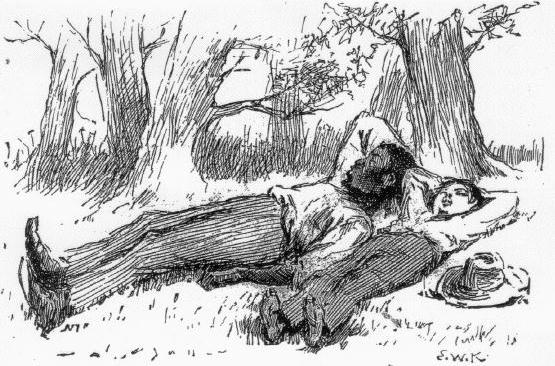
What is a word worth? According to Publishers Weekly, NewSouth Books' upcoming edition of Mark Twain's seminal novel "Adventures of Huckleberry Finn" will remove all instances of the N-word -- I'll give you a hint, it's not nonesuch -- present in the text and replace it with slave.
The new book will also remove usage of the word Injun. The effort is spearheaded by Twain expert Alan Gribben, who says his PC-ified version is not an attempt to neuter the classic but rather to update it.
"Race matters in these books," Gribben told PW. "It's a matter of how you express that in the 21st century."
No, Alan, it's not.

Pardon the unfortunate expression, but you can't whitewash history. Part of the reason you read Huck Finn in the first place is to gain a window into history, into a time where this simply was the way that people spoke and related to each other. To gain a proper understanding of our history and where we've come from (and, more importantly, where we're trying to go), you can't pretend that history was different than it was. To do so is irresponsible at its best, extremely dangerous at its worst--those who are ignorant of history are, as we've so often heard, doomed to repeat it.

We can pretend all we want that we've progressed beyond racism in our country, and that President Barack Obama is a symbol of how far we've come. I've done so myself for a very long time, dismissing incidents like the Jena Six debacle as isolated pockets of racism in an otherwise enlightened society. But the fact is that racism is still very much in vogue (much to my own dismay), and in my opinion this is in large part because we continue to refuse to have the difficult conversations that must be had. If we're not mature enough to let our children read books that talk about "niggers" and "Injuns" without becoming red in the face, then we're certainly not mature enough to actually achieve the racial harmony that we pretend to be striving for. Political correctness is a far cry from political equality.

There's plenty of blame to be passed around on this issue, but the one thing I am certain of is that censoring the "n-word" is a transparent attempt to seem progressive and politically correct without actually addressing the underlying discussion. You can't read Huck Finn without thinking and talking about racism, and that's the whole point--reading that book can often lead to a well-reasoned discussion about broader racial issues, but that conversation becomes that much less likely without the inflammatory language. A "Twain expert" like Alan Gribben should know that, but apparently he does not. This is a huge step backward for rational discourse and for "post-racial America". Too bad.

[CNN]

Thursday, December 9, 2010

On racism and race distinction

There's an interesting piece over at ESPN.com (every once in a while, they actually perform their journalistic duty well) that details an ongoing controversy surrounding a study that seemed to show that white referees in the NBA called fouls on black players more frequently than they did on white players. According to ESPN's Henry Abbott,
The study focused on implicit bias, a new discipline that had piqued interest in academia and beyond -- especially after it was featured prominently in Malcolm Gladwell's book "Blink." Researchers in many fields were finding that well-meaning people nobody would describe as closed-minded exhibited certain biases when they were asked to judge things very quickly. This was true of race, height, gender and more. (For instance, most of us choose to follow tall leaders, given an option, even though almost none of us think that's smart, when we stop to think about it.) 
"I literally got the idea while reading 'Blink,'" explains Price. He was eager to discover if the implicit bias Gladwell described actually affected decisions in the real world, for instance in the workplace. Sports presented a special opportunity to learn a lot more, because referees make quick decisions -- the kinds that reveal implicit bias -- every night. 
"If I had as good a set of data on judicial sentencing, or hiring decisions, I would have gone and looked at those," says Price, who was then getting his Ph.D. at Cornell, and is now an assistant professor at Brigham Young. "In my mind, I don't have any issues with the NBA. I actually think they've achieved racial equality in so many dimensions. They just happen to be a lab setting in which I get quasi-random assignment, I get lots of interactions between a small number of actors. I get a perfect setting to look at racial bias. And in some ways, if it's happening on a court in front of thousands of people, then it's probably happening when you go to make purchasing decisions, or hiring decisions, or whatever decisions we can think of as more important." 
And sure enough, Price and Wolfers found evidence of implicit bias among NBA referees. They didn't find any big problem -- it was less racism than other researchers had found in other populations. But still, some.
The NBA (and Commissioner David Stern) responded immediately and forcefully, denouncing the findings of the study as a "flat-out wrong" and a "bum rap"--rational discourse and a give-and-take discussion was instantly thrown out the window. The underlying details and back-and-forth (as detailed by the ESPN article) are interesting enough, but I focus more on the rhetoric surrounding the study--and the implications of that rhetoric.


I've long been bothered by the fact that rational discourse around racial issues is difficult to engender, in large part because any attempt to suggest a distinction or difference among the races typically provokes cries of "racism!" in response, thus stunting any further discussion. An interesting analogy is the controversy surrounding former Harvard President Larry Summers, who was widely and loudly criticized (and ultimately forced to step down) for his mere suggestion that women might have different "innate abilities" in math and science than men. That he was vilified for making his statements at a conference intended to discuss just those sorts of issues shows just how far out of whack the discourse on topics of racism and sexism have gotten.

I think that if we are truly going to arrive at a "post-racial America" (probably a little quick on the call there, eh NPR?), we are going to first have to allow ourselves to distinguish between "racism" and "racial distinction" (or perhaps, "racialism"). In order to agree that all races are equal, we do not need to agree that all races are the same--they are not. Certainly there are genetic and cultural differences between black Americans, white Americans, Asian-Americans, Latin Americans, and so forth, and to try to ignore that fact simply hampers the discourse surrounding racial issues.

There are definitely lessons to be learned from the NBA study--perhaps it is the "implicit bias" that the researchers were searching for, perhaps there is simply a difference in the type or style of players that make it to the NBA from each race (yeah... there is), or maybe black players just move faster than the referees' eyes can keep up with, which causes them to whistle more fouls because they're not seeing things properly (I don't know man, I'm just throwing stuff out there, leave me alone). But as long as we insist on reflexively denouncing any suggestion of racial distinction as "racism", we won't actually learn any of those lessons or respond to them--it's impossible.

I think that's too bad. Differences among races and genders don't need to imply superiority or a racial hierarchy--on the contrary, recognizing that different groups of people have different strengths is at the core of the "specialization" dynamic that has spurred global economic growth over the last century. It reminds me of a great quotation that I came across recently from Ludwig von Mises:

"If I am of the opinion that it is inexpedient to assign to the government the task of operating railroads, hotels, or mines, I am not an ‘enemy of the state' any more than I can be called an enemy of sulphuric acid because I am of the opinion that, useful though it may be for many purposes, it is not suitable either for drinking or for washing one's hands."

It's well said, albeit with respect to a much different topic than racism. Just because I draw a distinction between sulphuric acid and hand lotion does not mean that I am making a statement as to the relative value of the two. I simply recognize that there are relevant differences, and that those differences must be respected and understood in order to enjoy the relative benefits. Using the two interchangeably--or pretending that doing so is logical--would be disastrous. We need to get past that point in our racial discourse, or else we will never make any progress.

[ESPN.com]

Thursday, September 9, 2010

White girls like the Red Sox, black people like soul food

Tiptoeing ever so carefully into the world of racial profiling, I thought I'd pass along this post from Gizmodo. Crunching data from hundreds of thousands of OkCupid (an online dating site) profiles, the folks at Gizmodo ran a frequency analysis to see which words and terms showed up most often among individuals from different races, genders, and religions. I've posted their graphic summarizing "what white girls like" below.

The Gizmodo author summarized that:
If I had to choose over-arching themes for white people's lists, for men, I'd go with "frat house" and for women, "escapism." Whether one begot the other is a question I'll leave to the reader.
Given my history with religion (raised Catholic, now mostly agnostic), I also found their chart measuring writing proficiency against religious identification to be interesting and amusing.

Obviously there's some serious self-selection bias going on here, since these charts are really just measuring "what white girls who opted to sign up for OkCupid, a site that has disproportionate numbers of members from large cities, like". But it's amusing nonetheless, as are the rest of the "profiles" on the site.

Maybe female Red Sox fans just have a really, really hard time finding a date without help from the internet. What do I know? I married a Yankee fan.

[Gizmodo]