Friday, January 7, 2011

Important foreclosure update (hooray!)

In yesterday's post about the foreclosure mess, I made a brief late note to keep an eye on the Massachusetts Supreme Court case (the so-called Ibanez case) regarding the validity of certain foreclosures. I wrote:
Keep an eye on this case in the Massachusetts Supreme Court, which could potentially void certain foreclosures and score a "win" for homeowners' rights in this mess. We can't allow our rights to be trampled in order to ensure short-term economic (and housing market) stability. The rule of law and due process must be preserved at all costs, period; let's hope that's what happens here.
It seems that my prayers have been answered, and quickly at that.
US Bancorp and Wells Fargo & Co. lost a foreclosure case in Massachusetts’s highest court that will guide lower courts in that state and may influence others in the clash between bank practices and state real estate law. The ruling drove down bank stocks.
The state Supreme Judicial Court today upheld a judge’s decision saying two foreclosures were invalid because the banks didn’t prove they owned the mortgages, which he said were improperly transferred into two mortgage-backed trusts.
“We agree with the judge that the plaintiffs, who were not the original mortgagees, failed to make the required showing that they were the holders of the mortgages at the time of foreclosure,” Justice Ralph D. Gants wrote.
Wells Fargo, the fourth-largest U.S. lender by assets, dropped $1.10, or 3.4 percent, to $31.05 at 11:41 a.m. in New York Stock Exchange composite trading. US Bancorp declined 28 cents, or 1.1 percent, to $26.01.
The 24-company KBW Bank Index fell as much as 2.2 percent after the decision was handed down.
Claims of wrongdoing by banks and loan servicers triggered a 50-state investigation last year into whether hundreds of thousands of foreclosures were properly documented as the housing market collapsed. The probe came after JPMorgan Chase & Co. and Ally Financial Inc. said they would stop repossessions in 23 states where courts supervise home seizures and Bank of America Corp. froze U.S. foreclosures.
This ruling is almost certain to be appealed, but that's hardly important. With this decision now on the books establishing precedent, you can reasonably expect a flood of similar "wrongful foreclosure" lawsuits to be raised around the country.

Other states' courts obviously do not need to agree with, honor, or abide by the Massachusetts decision, but the precedent is no less important. The banks are in for a very serious sh**storm, and a well-deserved one at that. It doesn't matter if the homeowners in question were in fact in default on their mortgages (and in this case, they were). The rule of law and due process is what matters, and it must be protected.


The only (and I do mean the only) thing that ultimately separates first-world economies from third-world economies over the long run is viable protection of property rights. For more on that point, I encourage you to read here; the gist of it:
  • Not only will a weakened structure lead to a consequent lack of trust in the legal property system, which further encourages informal market activity (black markets), but it also negatively influences investment decisions by an investor or multinational interest for fear of a lost return.
  • The degree to which intellectual property is protected also highly influences a country's inventive character as it shapes the flow of innovative ideas and products that are developed, which in turn affects creative and economic wealth.
In essence, if people don't have legitimate reason to believe that they will own (and continue to own) the fruits of their labor, they will be less likely to produce any fruits at all. They'll be even less likely to engage in any type of research and development activity that leads to innovation, lest they invest heavily in a new technology and then see it stolen from them (whether by other individuals, corporations, or the government) before it can become profitable. This is the essence of U.S. patent law.

Housing rights are the most fundamental of all property rights--chip away there, and you'll undermine the economy at large. We can't afford to trade short-term economic stability for long-term economic viability. That's why this ruling is so important.

[Bloomberg]

(Once again) on creative destruction

Earlier this week I wrote about Dave Matthews Band and the changing face of the music industry, detailing the mostly productive (but in some ways destructive) impact of digital technology on the business. I missed an opportunity to discuss the apparent impending bankruptcy of Borders Group, the second-largest bookstore chain in the country (emphasis mine).
The first business day of the New Year brought the decision to fire the General Counsel and Chief Information Officer as the company prepares to negotiate with vendors. The end is clearly near for country’s second biggest book chain. But the question isn’t whither Borders but whether the loss matters much to books or the publishing business.
Barnes and Noble is busy claiming the all-important Christmas selling season had improved its same store sales by 9.7% in late 2010. We’ll have to wait to see what those numbers really mean but some substantial component of that rise is going to be Nook device sales.
Although Borders decline is a measure of shifting retail channels as books move away from being sold in bookstores to online and big box retail sales, it is also a sign of the rise of e-books. The Nook probably can’t save Barnes and Noble. But not having a electronic reading device surely hurt Borders. There are no accurate numbers for ebook sales but all accounts suggest that e-books own around 10% of the US market and will likely rise substantially again this year. (That’s another reason to write Borders off.)
This is a pretty perfect analogy to the music industry, as I described in the DMB post this week. The rise of e-books has democratized publishing and robbed the large publishing houses of their gatekeeper power. More and more authors are now able to self-publish and reach their intended audience, instead of relying upon publishers and retailers to do their work for them.

The development is, of course, bad news for the retailers and publishers, but not necessarily for the authors. Time will tell as always, but for now I consider this another example of creative destruction and of the power of technology in pushing capitalism forward.

[The Big Picture]

Thursday, January 6, 2011

Clip of the Week

Yes, I've written about inflation (especially with respect to food and other staple commodities) here before, but this video does an excellent job of showing how some companies are trying to mask the effects of inflation in ways that the consumer won't notice.


Remember, just because your weekly grocery bill isn't growing, that doesn't mean you're not feeling the effects of inflation. There are all sorts of tricks around to hide inflation, but it's very real and potentially very harmful.

[ABC News]  
(h/t The Mess That Greenspan Made)

Crazy Optical Illusion

I came across this one thanks to this video. The gist of it is that the squares labeled "A" and "B" are the same color. I swear, they are.


I literally had to paste the thing into "Paint" and erase everything but the boxes to convince myself that it was true. I'm still barely convinced. This has been messing with my mind for at least 20 minutes. I have a lot of time on my hands.

A summary of the foreclosure mess

I've stayed largely quiet on the foreclosure mess to this point, in large part because it's sort of hard to know where to start. So many people have taken so many liberties with the lending and foreclosure process that the result is just a head-shakingly labyrinthine disaster area that casts significant doubt on the health of our housing market going forward.

So rather than try to catch up with a ridiculously long blog post enumerating all the ins and outs of the situation and my feelings about them, I'm going to instead post this presentation from the Florida Attorney General's Office. It's both comprehensive and easy to understand, and it lays things out in a very clean way. The first 25 pages or so are essentially background, and it's followed up by significant evidence of fraud and other unethical or criminal behavior. Interesting and important stuff.

The next step, of course, is actually prosecuting some of these cases in meaningful ways, something that AGs in many states have thus far been reluctant to do. In many cases, their reluctance has stemmed from political pressure--politicians and companies alike (not to mention certain individuals) have a lot to lose from a "double-dip" in housing that proper prosecution of this fraud might cause, and they've shown that they are willing to go to great lengths to avoid it. But you can't allow these sorts of crimes to persist simply because you're afraid of the economic effects of stopping them--remember, that's in large part how we got into this mess in the first place.

Keep an eye on this case in the Massachusetts Supreme Court, which could potentially void certain foreclosures and score a "win" for homeowners' rights in this mess. We can't allow our rights to be trampled in order to ensure short-term economic (and housing market) stability. The rule of law and due process must be preserved at all costs, period; let's hope that's what happens here.

[The Big Picture]

Wednesday, January 5, 2011

Another step backward for rational discussion of racial relations

I've written here before about race and racial relations, and my view that we'll never actually achieve a "post-racial America" until we learn how to engage in mature discussions of racial distinction without instinctively crying "racism".

This won't help:
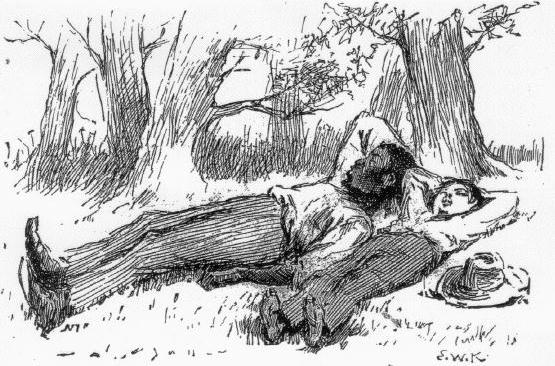
What is a word worth? According to Publishers Weekly, NewSouth Books' upcoming edition of Mark Twain's seminal novel "Adventures of Huckleberry Finn" will remove all instances of the N-word -- I'll give you a hint, it's not nonesuch -- present in the text and replace it with slave.
The new book will also remove usage of the word Injun. The effort is spearheaded by Twain expert Alan Gribben, who says his PC-ified version is not an attempt to neuter the classic but rather to update it.
"Race matters in these books," Gribben told PW. "It's a matter of how you express that in the 21st century."
No, Alan, it's not.

Pardon the unfortunate expression, but you can't whitewash history. Part of the reason you read Huck Finn in the first place is to gain a window into history, into a time where this simply was the way that people spoke and related to each other. To gain a proper understanding of our history and where we've come from (and, more importantly, where we're trying to go), you can't pretend that history was different than it was. To do so is irresponsible at its best, extremely dangerous at its worst--those who are ignorant of history are, as we've so often heard, doomed to repeat it.

We can pretend all we want that we've progressed beyond racism in our country, and that President Barack Obama is a symbol of how far we've come. I've done so myself for a very long time, dismissing incidents like the Jena Six debacle as isolated pockets of racism in an otherwise enlightened society. But the fact is that racism is still very much in vogue (much to my own dismay), and in my opinion this is in large part because we continue to refuse to have the difficult conversations that must be had. If we're not mature enough to let our children read books that talk about "niggers" and "Injuns" without becoming red in the face, then we're certainly not mature enough to actually achieve the racial harmony that we pretend to be striving for. Political correctness is a far cry from political equality.

There's plenty of blame to be passed around on this issue, but the one thing I am certain of is that censoring the "n-word" is a transparent attempt to seem progressive and politically correct without actually addressing the underlying discussion. You can't read Huck Finn without thinking and talking about racism, and that's the whole point--reading that book can often lead to a well-reasoned discussion about broader racial issues, but that conversation becomes that much less likely without the inflammatory language. A "Twain expert" like Alan Gribben should know that, but apparently he does not. This is a huge step backward for rational discourse and for "post-racial America". Too bad.

[CNN]

This is awesome

I suppose I could hold this back for Clip of the Week tomorrow, but it's too good not to share. It's a cool story that I hope ends well; it's also another example of the amazing possibilities of social media.
The homeless man with the "golden radio voice" wanted a second chance -- and did he ever get it.
As soon as Ted Williams, a panhandler who became an online hit after video of him begging on an Ohio roadside was posted to the Internet, appeared on a local radio show this morning the offers began pouring in -- including a dream job with the Cleveland Cavaliers and a free house.
"The Cleveland Cavaliers just offered me a full-time job and a house! A house! A house!," repeated a stunned Williams, 71, on local radio station WNCI.
A caller to the show who said she represented the Cavs offered Williams, who shot to stardom after local newspaper the Columbus Dispatch on Monday posted video of his perfectly-pitched panhandling, a full-time job doing voiceover work for the team and parent company and a free home in Cleveland.
The Bedford-Stuyvesant, Brooklyn, native trained to be a radio announcer before drugs and alcohol ruined his chances at a career, and he was reduced to begging on the side of a road in Columbus, Ohio, before the newspaper found him.
I've posted the original YouTube video below (over 4 million views in just 2 days?!), which is pretty crazy. There's not a whole ton of happy stories out there lately, and I certainly don't spend enough time focusing on them here. But this one makes me smile. Very cool.

[NY Post]